Case studies
LATAM Sales Onboarding
Mexico, Colombia and Argentina were the bulk of our hiring, and almost half of the new joiners left early. I rebuilt the programme and I own it all the way down to its unit economics.
Problem
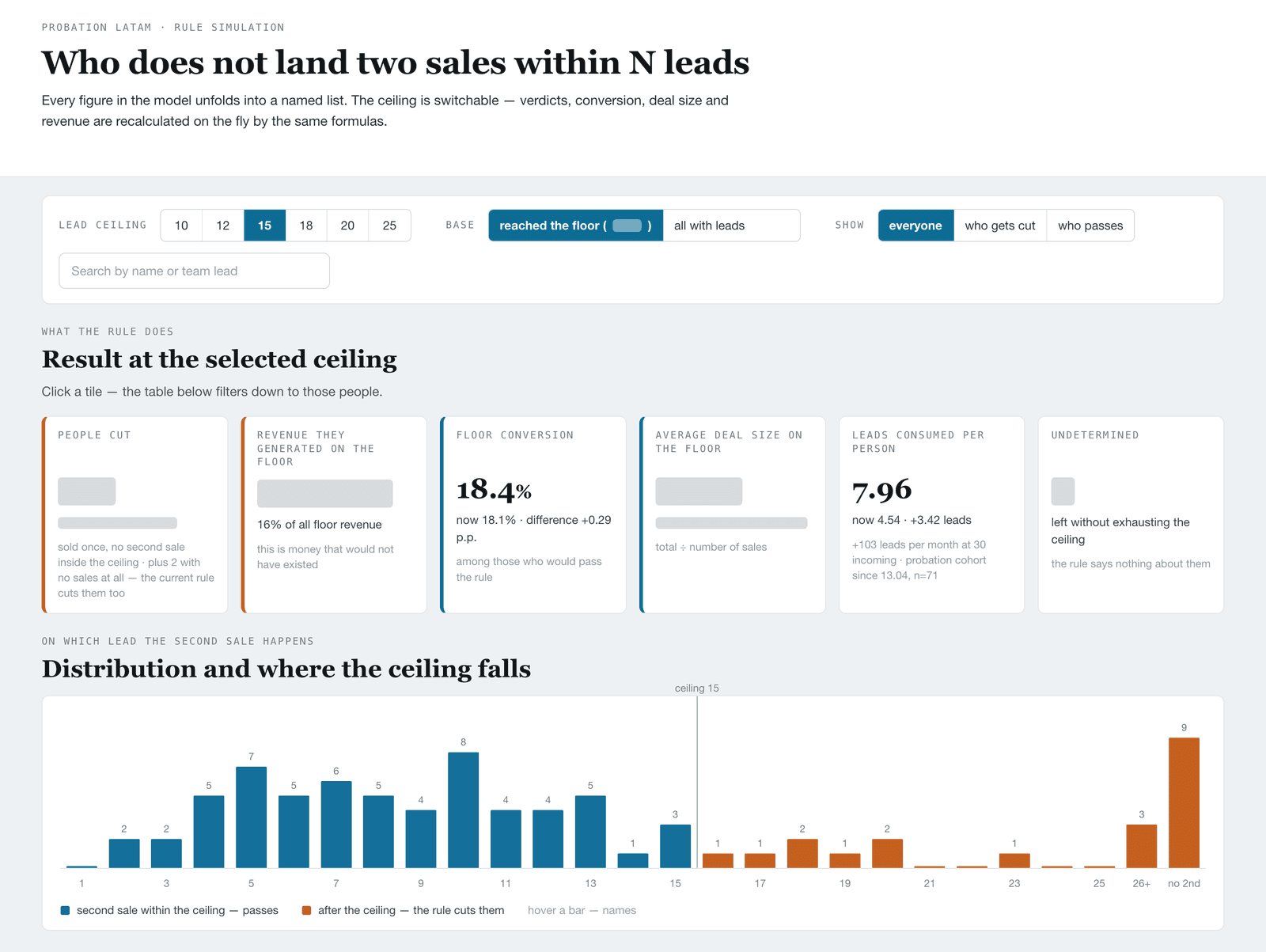
Almost half the new joiners left early, assessment was subjective — a test showed what someone knew and nothing about how they worked — and the programme fell apart the moment hiring scaled.
Solution
A day-by-day programme with the infrastructure underneath it: exams and a scoring model for qualitative signals, a programme database, and an LMS written from scratch.
How it works
Day-by-Day Programme
Sales onboarding broken down by day: content, practice, checkpoints, and who owns each one.
Exams and Scoring
A scoring model that captures qualitative signals, not just what a test can measure.
LMS
Written from scratch: exercises, stage-by-stage progression, and integrations with the rest of the stack.
Programme Database
Progress, exam results and joiner status in one place — the foundation the analytics sit on.
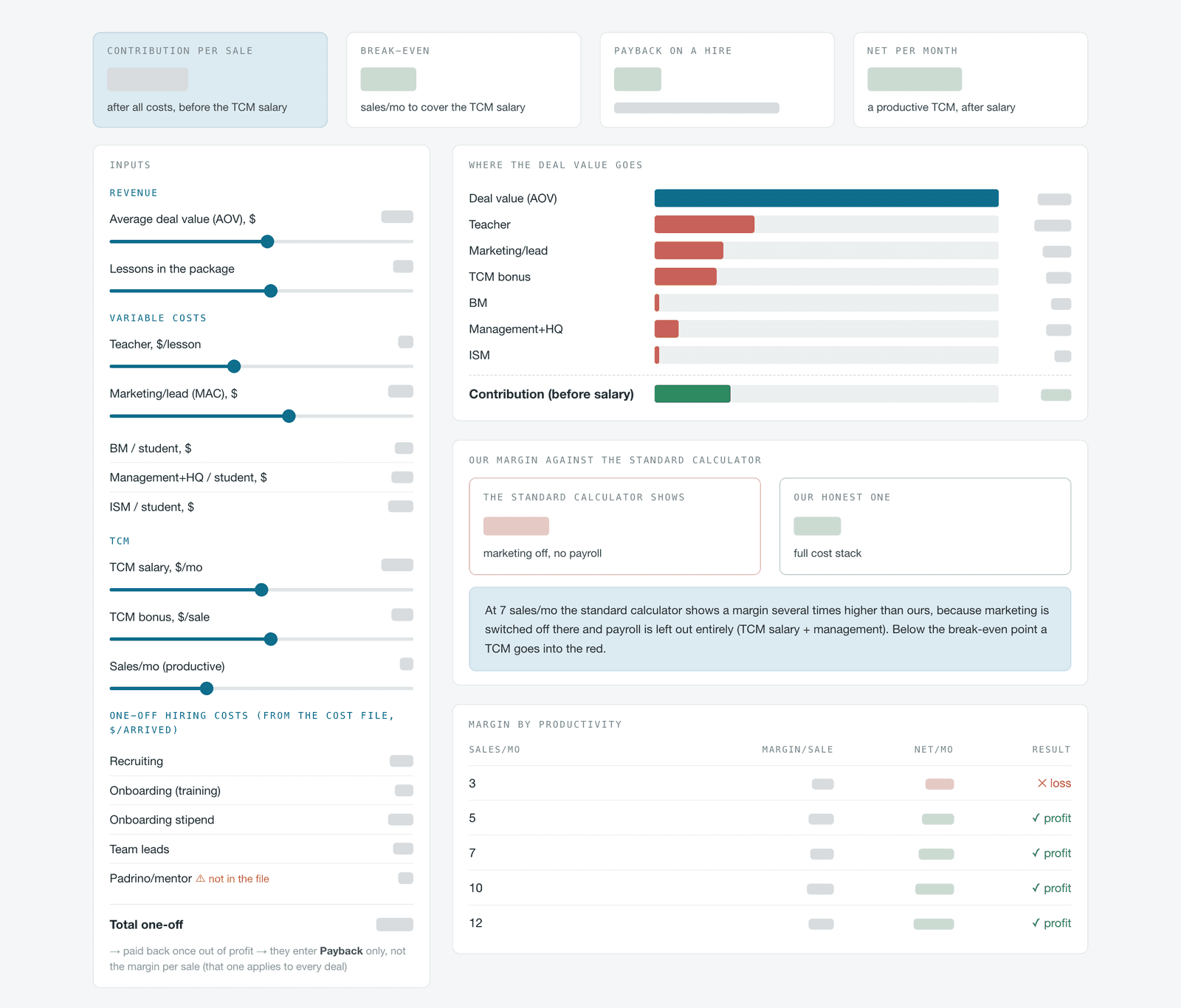
Unit Economics
What the programme costs and what it returns — the link between onboarding spend and people reaching the floor.
Programme Team
Two LATAM onboarding managers reporting to me, with split ownership and a working cadence.
19% → 34%
probation → live sales floor
48% → 33%
early attrition
25 → 40
people reaching the floor per quarter